News & Updates
Stay ahead of the curve with our curated collection of news, practical tips, and technical tutorials for mechanical systems.

Understanding the Real Difference Between Belt Drives & Spur Gears
Most people see a pulley or spur gear as just another mechanical component.
In reality, they are governed by completely different engineering principles — and understanding those principles is what determines whether a machine runs efficiently or fails prematurely.
Belt & Pulley Systems — Controlled by Tension and Friction
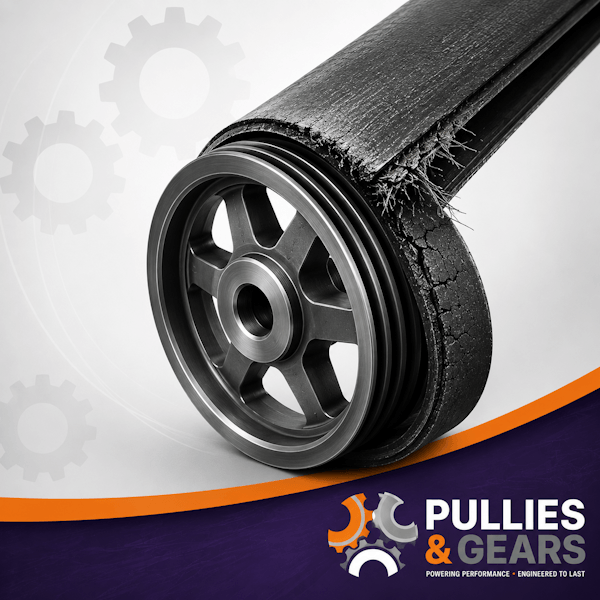
A belt drive system does not work because the pulley “pulls” the belt.
The belt actually drives the pulley.
This is one of the most misunderstood concepts in mechanical power transmission.
A pulley system depends on:
• Belt tension
• Friction
• Wrap angle
• Belt elasticity
• Surface finish
• Groove geometry
The belt stores and releases energy through elastic deformation, allowing the system to absorb shock loads and compensate for minor misalignment.
That is why belt-driven systems often run smoother than rigid gear systems.
What Causes Belt & Pulley Failure?

When a pulley system begins to fail, the warning signs appear gradually:
- Belt glazing
- Fraying
- Slipping
- Excessive heat
- Noise and vibration
These symptoms usually indicate:
- Misalignment
- Incorrect belt tension
- Contamination
- Pulley wear
- Incorrect groove geometry
A pulley is more than a rotating wheel — it becomes a diagnostic tool that reveals the mechanical condition of the entire system.
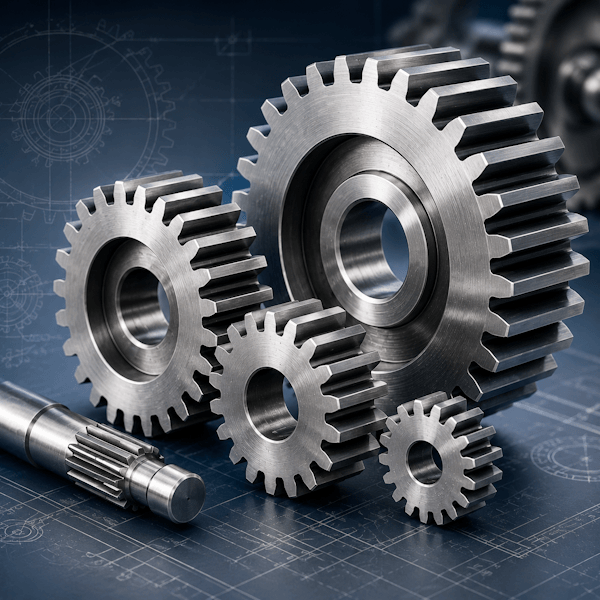
Unlike pulleys, spur gears do not rely on friction or elasticity.
They rely on:
• Tooth geometry
• Pressure angle
• Involute tooth profiles
• Material hardness
• Precision machining
A spur gear delivers direct, rigid torque transmission with almost no energy absorption.
This means:
✔ Accurate speed ratios
✔ High efficiency
✔ Precise power transfer
But it also means:
⚠ Shock loads transfer directly through the gear train
⚠ Lubrication becomes critical
⚠ Contamination can destroy the tooth surface
⚠ Incorrect hardness leads to pitting and gear failure
Where a belt drive absorbs shock…
A gear train exposes it.
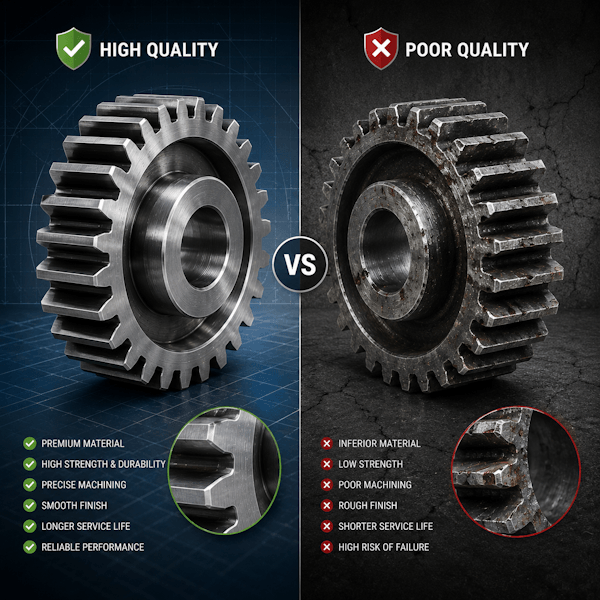
Why Material Quality Matters
At Pullies & Gears, we manufacture and supply pulleys and spur gears using imported C45 EN8 compliant steel.
Material quality directly affects:
• Wear resistance
• Torque handling
• Surface durability
• Machinability
• Load performance
Inferior materials can lead to:
❌ Pulley deformation
❌ Belt tracking issues
❌ Gear pitting
❌ Tooth scoring
❌ Tooth shear failure
That is why engineering-grade steel is not optional in industrial applications.
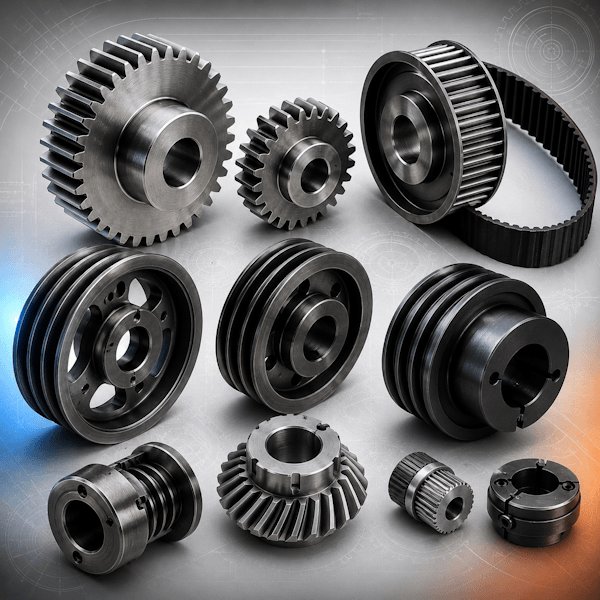
Our Range Includes
✔ Spur Gears
✔ Timing Pulleys
✔ V-Belt Pulleys
✔ Taper Lock Pulleys
✔ Custom Manufactured Gears
✔ Industrial Power Transmission Components
Manufactured to precise engineering specifications for industrial and mechanical applications.
Engineering Is About Understanding Behaviour
The most dangerous assumption in engineering is believing that simple-looking components are simple to understand.
A pulley system manages energy dynamically.
A spur gear transfers force mechanically and directly.
Both systems obey different physical laws — and selecting the correct solution is essential for reliability, efficiency, and long-term machine performance.
Need Expert Advice on Pulleys or Spur Gears?
Whether you need:
• Replacement spur gears
• Industrial pulleys
• Custom gear manufacturing
• Material recommendations
• Power transmission solutions
• Gear failure diagnosis